Gnosis Chain powers a thriving DeFi ecosystem with over $91 million TVL (DeFiLlama, April 2026), real-world payments through GnosisPay, and the world's most accessible staking (1 GNO vs 32 ETH on Ethereum). As a developer building on Gnosis, your RPC provider choice directly impacts transaction costs, protocol reliability, and user experience. This guide compares the top 8 Gnosis Chain RPC providers to help you select the optimal infrastructure for your DeFi application.
What is Gnosis Chain?
Gnosis Chain is an EVM-compatible, Proof-of-Stake blockchain optimized for stable transactions, DeFi protocols, and real-world payments. Originally launched as xDAI Chain, it merged with Gnosis to create an efficient, low-cost alternative to Ethereum mainnet.
Key specifications:
- Chain ID: 100 (mainnet)
- Block Time: 5 seconds
- Block Gas Limit: 30M gas units
- Consensus: Proof of Stake (Beacon Chain)
- Native Gas Token: xDAI (stablecoin pegged to USD)
- Staking Token: GNO (minimum 1 GNO to stake)
- Compatibility: Full EVM compatibility (Cancun fork)
- Average TPS: ~1.6 (Max: 80+ TPS)
Why Gnosis Chain for DeFi and Payments?
Stablecoin Gas Fees
Unlike other EVM chains, Gnosis uses xDAI—a USD-pegged stablecoin—for transaction fees. This means:
- Predictable costs: $0.001-0.01 per transaction regardless of crypto volatility
- User-friendly: No mental math converting ETH/BNB prices to USD
- DeFi optimization: Stable gas costs improve protocol economics
- Payment integration: Ideal for GnosisPay and merchant applications
Accessible Staking
Gnosis requires only 1 GNO ($120) to run a validator versus Ethereum's 32 ETH ($47,000):
- Lower barrier to entry for decentralization
- More validators = stronger network security
- GNO holders earn staking rewards while securing the network
Thriving DeFi Ecosystem
Major protocols deployed on Gnosis:
- Aave: Lending and borrowing
- Curve: Stablecoin DEX
- Balancer: Liquidity pools
- Spark: MakerDAO's lending protocol
- Agave: Native lending market
- Cow Protocol: MEV-protected trading
Why Your RPC Provider Matters
Your RPC provider is the gateway between your DeFi protocol and the Gnosis Chain. The right provider impacts:
- Transaction Reliability: Failed transactions cost users gas fees
- MEV Protection: Critical for DEX and trading applications
- Uptime: DeFi protocols need 99.9%+ availability
- Archive Data: Essential for analytics, tax reporting, and historical queries
- WebSocket Support: Real-time price feeds and event monitoring
- Cost Efficiency: High-volume DeFi operations require affordable infrastructure
Top Gnosis Chain RPC Providers Compared
Quick Comparison Table
| Provider | Free Tier | Paid Plans From | Pricing Model | Best For |
|---|---|---|---|---|
| Dwellir | 100K/day | $49/mo unlimited | 1 request = 1 credit | Predictable DeFi costs |
| Alchemy | 300M CU/mo | $199/mo | Compute units | Feature-rich platform |
| QuickNode | 50M credits | $49/mo | API credits | Performance & reliability |
| Chainstack | 3M requests | $49/mo | Request-based | Managed nodes |
| Ankr | 500M CU/day | $50/mo | Compute units | Multi-chain DeFi |
| GetBlock | Free tier | $49/mo | Compute units | Developer flexibility |
| Nodies | Public tier | $50/mo | Request-based | High-availability |
| BlockPI | Free tier | $49/mo | Compute units | Budget-friendly |
1. Dwellir - Simplest Pricing for DeFi Protocols
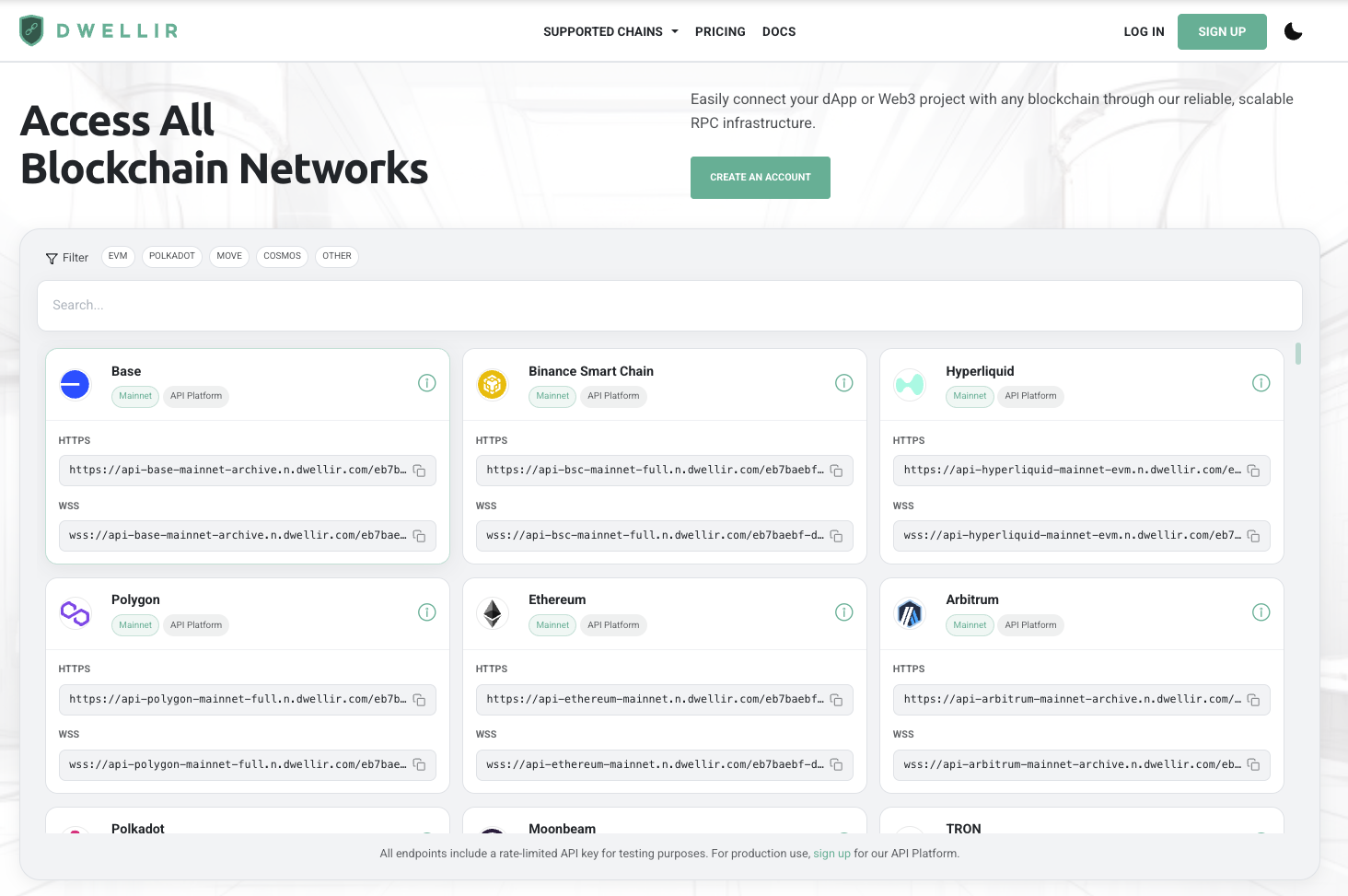
Pricing: $49 to $999/month | Model: 1 request = 1 credit
Dwellir eliminates compute unit complexity with transparent 1:1 pricing—crucial for DeFi protocols that need predictable infrastructure costs. Every RPC call costs one credit regardless of complexity, making budgeting straightforward.
Key Features:
- Simple pricing across all methods (trace, debug, standard)
- 140+ blockchains with one API key
- 99.99% uptime SLA
- HTTPS, WSS, and GRPC support
- $2-5 per million overage (industry's lowest)
- Archive node access included
- Real-time WebSocket subscriptions
Plans:
- Free: Free (100K/day, 20 RPS)
- Developer: $49/mo (unlimited requests, 100 RPS)
- Growth: $299/mo (unlimited requests, 500 RPS)
- Scale: $999/mo (unlimited requests, 5,000 RPS)
Cost Example: 100M monthly requests = $299/mo (Growth plan)
Best For: DeFi protocols needing predictable costs, multi-chain operations, and unlimited requests for high-volume operations.
2. Alchemy - Comprehensive DeFi Development Platform
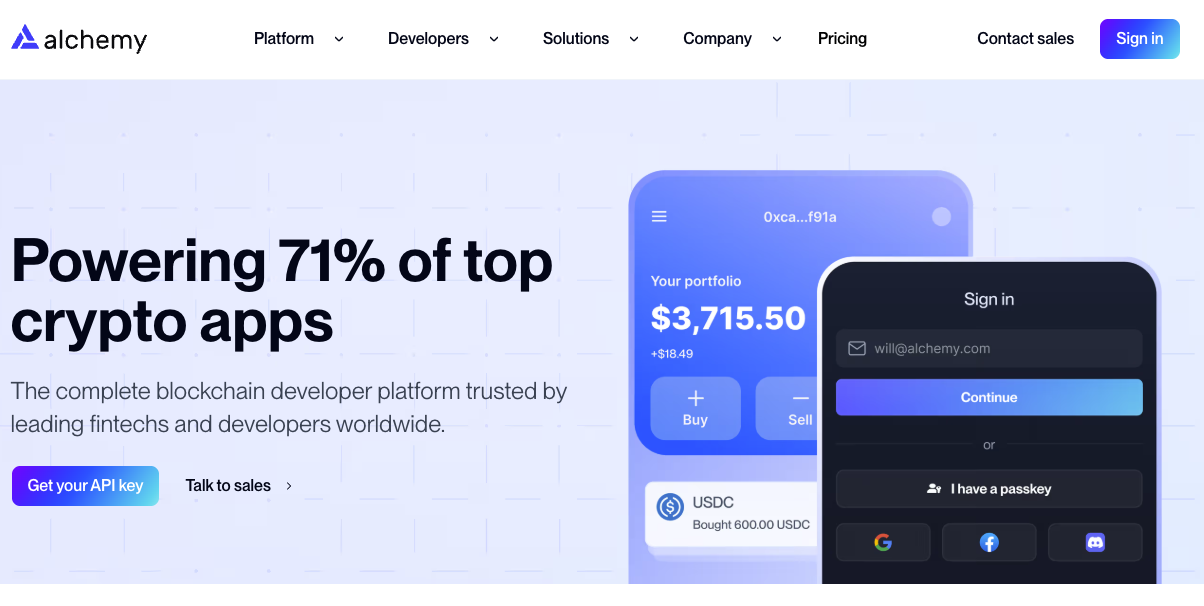
Pricing: $199 to custom | Model: Compute units (10-500 CU per request)
Alchemy provides extensive Web3 development infrastructure including enhanced APIs for token data, transaction simulation, and comprehensive analytics—valuable for complex DeFi protocols.
Key Features:
- Advanced developer dashboard
- Token APIs for ERC-20/ERC-721 tracking
- Enhanced WebSocket subscriptions
- Transaction simulation (prevent failed txns)
- Archive data access
- Notify API for webhooks
- Debug and trace methods
Pricing:
- Free: 300M CU/month
- Growth: $199/mo (1.5B CU)
- Scale: $499/mo (6B CU)
- Enterprise: Custom pricing
Cost Example: 100M DeFi requests ≈ $200-450/mo depending on method mix
Best For: DeFi teams needing comprehensive tooling, token APIs, and transaction simulation for complex protocols.
3. QuickNode - High-Performance DeFi Infrastructure
Pricing: $49 to $999+/month | Model: API credits (1-500 per request)
QuickNode operates a globally distributed network with 30+ regions—essential for DeFi protocols serving international users requiring consistent performance.
Key Features:
- Global edge network for low latency
- Add-ons marketplace (NFT APIs, analytics)
- GraphQL support for efficient queries
- Performance analytics dashboard
- Archive node access
- WebSocket support
- Premium support options
Pricing:
- Free: 50M credits
- Build: $49/mo (80M credits)
- Accelerate: $249/mo (450M credits)
- Scale: $499/mo (950M credits)
- Business: $999/mo (2B credits)
Cost Example: 100M DeFi requests ≈ $250-500/mo depending on methods
Best For: DeFi protocols requiring global performance, low latency, and premium support.
4. Chainstack - Managed Blockchain Infrastructure
Pricing: $49 to $990/month | Model: Request-based
Chainstack offers both shared and dedicated node options with comprehensive management tools—ideal for DeFi teams wanting infrastructure handled by experts.
Key Features:
- Dedicated Gnosis nodes available
- Subgraph indexing (The Graph)
- Analytics dashboard
- Bolt API for enhanced performance
- 24/7 enterprise support
- WebSocket support
- Trace and debug methods
Pricing:
- Developer: Free (3M requests)
- Growth: $49/mo (20M requests)
- Pro: $199/mo (80M requests)
- Business: $349/mo (140M requests)
- Enterprise: $990/mo (400M requests)
Cost Example: 100M requests = $349-990/mo (Business-Enterprise)
Best For: DeFi protocols wanting managed infrastructure, subgraph integration, and dedicated support.
5. Ankr - Multi-Chain DeFi Infrastructure
Pricing: $50 to $2,000+/month | Model: Compute units
Ankr specializes in multi-chain infrastructure—perfect for DeFi protocols operating across multiple chains simultaneously (Gnosis + Ethereum + Polygon, etc.).
Key Features:
- 50+ blockchains supported
- Advanced caching layer
- Premium endpoints
- RPC aggregation across providers
- Token APIs
- Liquid staking services
Pricing:
- Free: 500M CU/day (rate limited)
- PAYG: $50/mo (500M CU)
- PAYG: $200/mo (2B CU)
- PAYG: $500/mo (5B CU)
- PAYG: $1,000/mo (10B CU)
Cost Example: 100M requests ≈ $100-300/mo depending on usage
Best For: Multi-chain DeFi protocols needing consistent infrastructure across networks.
6. GetBlock - Developer-Focused Infrastructure
Pricing: $49 to $499+/month | Model: Compute units
GetBlock uses a transparent Compute Units model with blockchain-specific multipliers—giving DeFi developers flexibility in optimizing RPC usage.
Key Features:
- 50+ blockchains supported
- Shared and dedicated nodes
- REST and WebSocket APIs
- Archive access
- Flexible rate limits
- Method-specific pricing multipliers
- Developer-friendly dashboard
Pricing:
- Free: Available with CU limits
- Starter: $49/mo (50M CU)
- Advanced: $199/mo (220M CU)
- Pro: $499/mo (600M CU)
Cost Example: 100M requests ≈ $200-400/mo (method-dependent)
Best For: DeFi developers seeking flexible compute-based pricing with detailed cost breakdown.
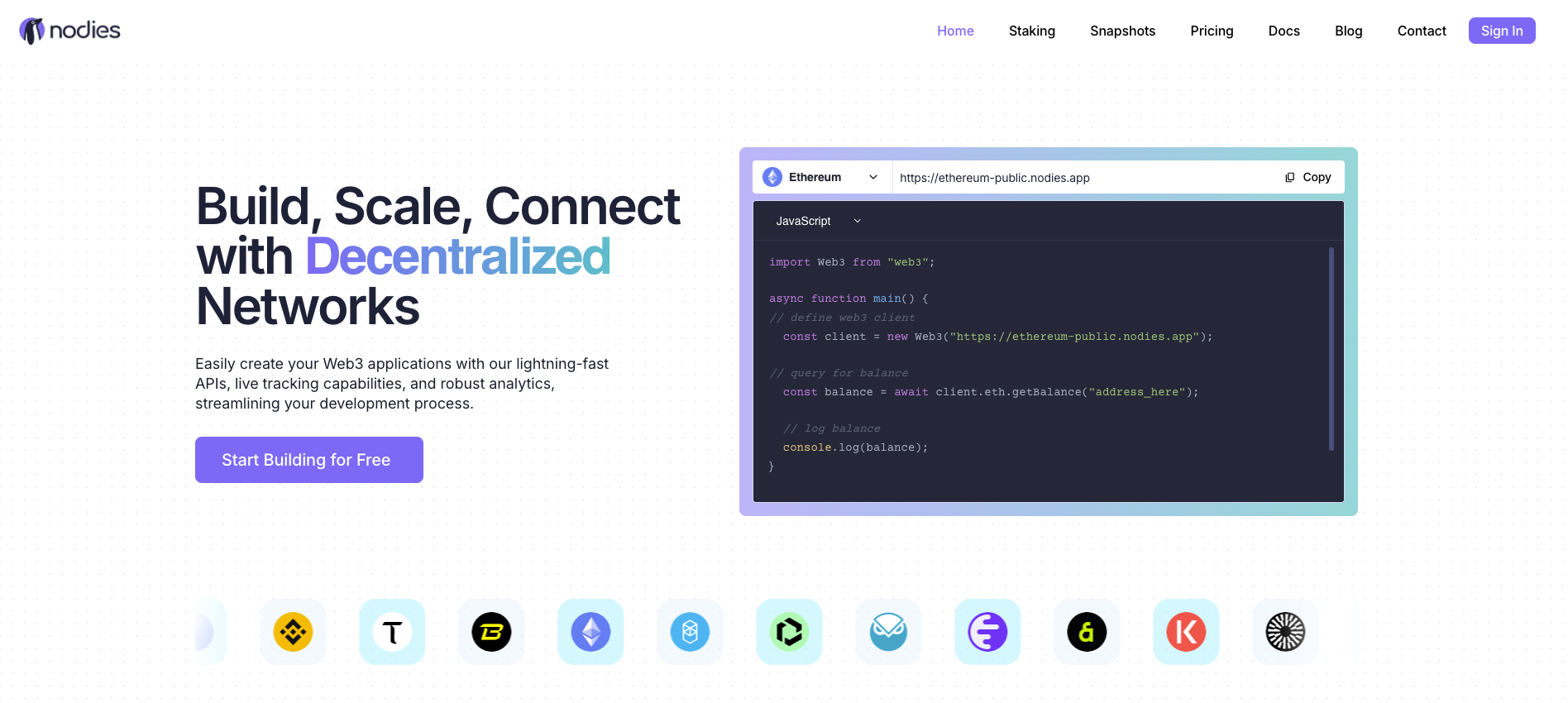
7. Nodies - High-Availability Infrastructure
Pricing: $50 to $200+/month | Model: Request-based
Nodies offers free public endpoints for Gnosis Mainnet and Chiado testnet, plus straightforward paid plans for production workloads with simple request-based pricing.
Key Features:
- Free public endpoints
- Simple request-based pricing
- Enterprise custom plans
- WebSocket support
- Gnosis mainnet and testnet
- High availability infrastructure
Pricing:
- Free: Public tier (rate limited)
- Starter: $50/mo (10M requests)
- Pro: $200/mo (50M requests)
Cost Example: 100M requests = $200-400/mo (request-based)
Best For: Teams transitioning from public to private infrastructure or needing simple request-based pricing.
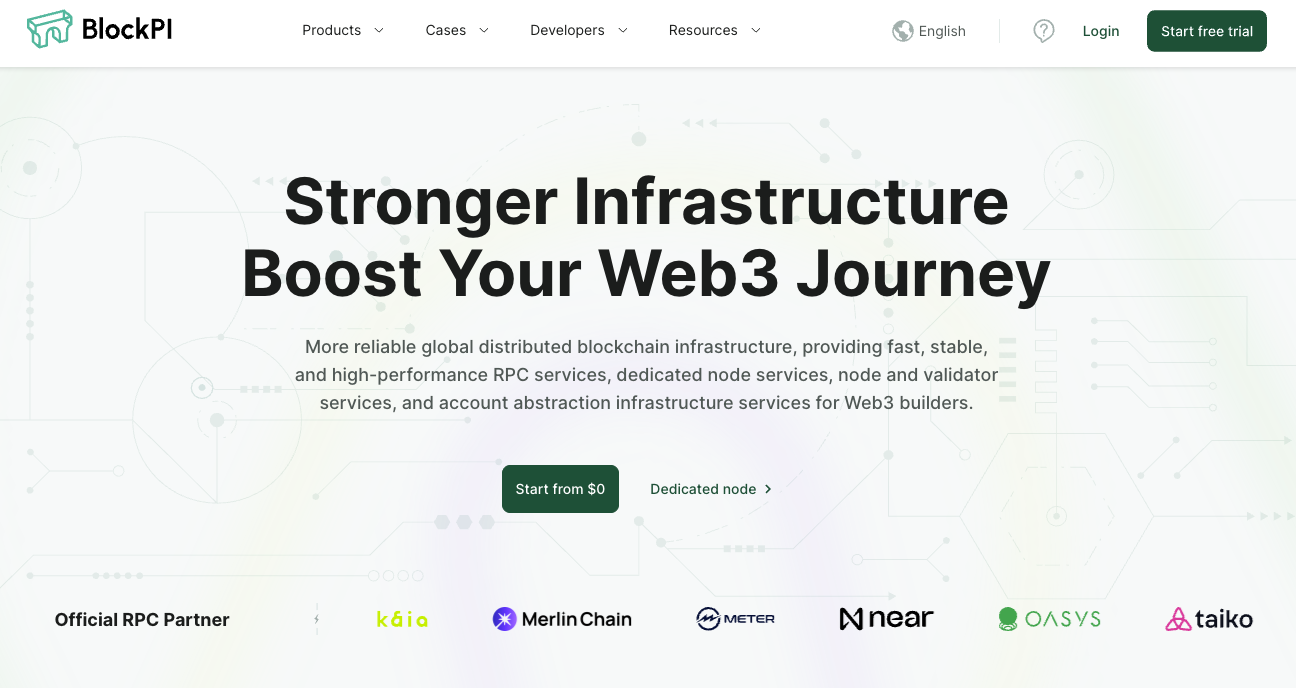
8. BlockPI - Budget DeFi Infrastructure
Pricing: $49 to $299/month | Model: Compute units
BlockPI offers competitive pricing for DeFi developers—especially attractive for early-stage protocols and startups.
Key Features:
- Multi-chain support
- Compute unit efficiency
- Standard RPC methods
- Archive data available
- WebSocket support
- Developer dashboard
Pricing:
- Free: Available
- Elementary: $49/mo (500M CU)
- Premium: $299/mo (4B CU)
Cost Example: 100M requests ≈ $50-150/mo (budget-friendly)
Best For: Early-stage DeFi protocols and startups watching infrastructure budgets.
Pricing Model Breakdown: DeFi Considerations
Understanding pricing models is critical for budgeting DeFi infrastructure costs.
Simple Pricing (Dwellir)
How it works: 1 request = 1 unit, regardless of method complexity
DeFi Advantages:
- Predictable monthly costs
- Easy to forecast based on transaction volume
- No surprise bills during high-volume periods
- Trace/debug methods don't cost 50x more
Example: 100M protocol interactions = 100M credits at any tier
Compute Unit Pricing (Alchemy, QuickNode, Ankr, GetBlock, BlockPI)
How it works: Each method has a multiplier based on computational resources
Common DeFi Method Costs:
| Method | Compute Units | DeFi Use Case |
|---|---|---|
eth_blockNumber | 10 CU | Blockchain sync |
eth_call | 20-26 CU | Read contract state |
eth_getBalance | 19 CU | Check wallet balances |
eth_getLogs | 75 CU | Event monitoring (swaps, transfers) |
eth_getTransactionReceipt | 15 CU | Confirm transactions |
debug_traceTransaction | 309 CU | Debug failed transactions |
trace_filter | 500 CU | Analyze transaction flows |
DeFi Challenges:
| Issue | DeFi Impact |
|---|---|
| Unpredictable costs | Difficult to forecast with protocol growth |
| Complex calculations | Hard to estimate costs per user |
| Debug/trace expensive | Troubleshooting becomes cost-prohibitive |
| Event-heavy workloads | Monitoring swaps/transfers costs 75 CU each |
Example: 100M DeFi requests could cost 1B-6B+ CU depending on operation mix
Real Cost Comparison: 100M Monthly DeFi Requests
Typical DeFi protocol mix (60% state reads, 30% logs/events, 10% receipts):
| Provider | Actual Cost | Model | Notes |
|---|---|---|---|
| Dwellir | $299/mo | Simple 1:1 | Unlimited requests |
| BlockPI | $50-300/mo | CU-based | Budget option |
| QuickNode | $250-500/mo | Credits | Premium performance |
| Alchemy | $200-500/mo | CU-based | Feature-rich |
| Chainstack | $350-990/mo | Request-based | Managed service |
Key Takeaway: Simple pricing (Dwellir) saves 25-50% for DeFi at scale by eliminating method premiums and offering unlimited requests.
Key Selection Criteria for DeFi Applications
1. Protocol Type
DEXs and AMMs:
- Priority: WebSocket reliability, event monitoring, low latency
- Best Options: QuickNode, Dwellir, Alchemy
Lending Protocols:
- Priority: Archive data, state reads, reliability
- Best Options: Dwellir, Chainstack, Alchemy
Analytics Platforms:
- Priority: Archive access, trace methods, historical data
- Best Options: Dwellir (no method premiums), Alchemy, QuickNode
Yield Aggregators:
- Priority: Multi-chain support, cost efficiency, reliability
- Best Options: Dwellir (140+ chains), Ankr (50+ chains)
2. Budget Considerations
Early-Stage Protocols:
- Use free tiers during development
- Consider: BlockPI ($49), GetBlock ($49), Dwellir ($49)
Growing DeFi Protocols (1M+ monthly users):
- Need predictable costs and scaling
- Consider: Dwellir ($299), Ankr ($200), QuickNode ($249)
Established DeFi Protocols:
- Require SLAs and dedicated infrastructure
- Consider: Alchemy (enterprise), QuickNode (business), Chainstack (dedicated)
3. Multi-Chain Strategy
Building Across Multiple Chains?
- Best: Dwellir (140+ chains, one key)
- Good: Ankr (50+ chains), GetBlock (50+ chains)
- Limited: Gnosis-specific providers
4. GnosisPay Integration
Payment Applications:
- Need: High uptime, low latency, stable costs
- Best: QuickNode, Dwellir, Chainstack
- Critical: xDAI gas fee stability makes Gnosis ideal for payments
5. DAO Operations
On-Chain Governance:
- Need: Archive data, event indexing, reliability
- Best: Dwellir, Alchemy, Chainstack
- Important: Gnosis's low fees make frequent voting affordable
Feature Comparison Matrix
| Feature | Dwellir | Alchemy | QuickNode | Chainstack | Ankr | GetBlock |
|---|---|---|---|---|---|---|
| Archive Data | ✅ | ✅ | ✅ | ✅ | ✅ | ✅ |
| WebSockets | ✅ | ✅ | ✅ | ✅ | ✅ | ✅ |
| Trace Methods | ✅ Same price | ✅ +30x cost | ✅ +50x cost | ✅ Included | ✅ | ✅ |
| Debug Methods | ✅ Same price | ✅ +30x cost | ✅ +50x cost | ✅ Included | ✅ | ✅ |
| Token APIs | ❌ | ✅ | ✅ Add-on | ❌ | ✅ | ❌ |
| GraphQL | ❌ | ❌ | ✅ | ✅ | ❌ | ❌ |
| Subgraph | ❌ | ❌ | ❌ | ✅ | ❌ | ❌ |
| SLA | 99.99% | 99.9% | 99.95% | 99.9% | 99.9% | 99.9% |
| Free Tier | ✅ | ✅ | ✅ | ✅ | ✅ | ✅ |
| Multi-Chain | 140+ | 20+ | 30+ | 25+ | 50+ | 50+ |
Cost Optimization Strategies for DeFi Protocols
1. Cache Contract State
Implement caching for frequently read data:
// Cache token balances for 5-10 seconds
const cache = new Redis();

async function getCachedBalance(token, address) {
  const key = `balance:${token}:${address}`;
  let balance = await cache.get(key);

  if (!balance) {
    balance = await tokenContract.balanceOf(address);
    await cache.set(key, balance, 10); // 10s TTL
  }

  return balance;
}
Savings: 50-70% reduction in RPC calls for frequently accessed data
2. Batch Read Operations
Use multicall for bulk operations:
// Instead of 50 individual token.balanceOf() calls
const balances = await Promise.all(
  addresses.map(addr => token.balanceOf(addr))
);

// Use multicall contract
const calls = addresses.map(addr => ({
  target: tokenAddress,
  callData: token.interface.encodeFunctionData('balanceOf', [addr])
}));
const results = await multicall.aggregate(calls);
Savings: 90-95% fewer RPC calls
3. Optimize Event Monitoring
Subscribe to specific contract events:
// Monitor only your protocol's contracts
const filter = {
  address: [protocolAddress1, protocolAddress2],
  topics: [
    ethers.utils.id("Swap(address,uint256,uint256)"),
    ethers.utils.id("Transfer(address,address,uint256)")
  ]
};

provider.on(filter, (log) => {
  // Process relevant events only
  handleProtocolEvent(log);
});
Savings: 80%+ reduction compared to broad log polling
4. Smart Archive Usage
- Use standard nodes for recent data (last 128 blocks)
- Use archive nodes only for historical queries
- Cache historical queries indefinitely
- Store aggregated data in your database
Savings: 60-80% on archive-dependent operations
5. Implement Request Deduplication
Prevent duplicate concurrent requests:
const pending = new Map();

async function deduplicatedCall(method, params) {
  const key = `${method}:${JSON.stringify(params)}`;

  if (pending.has(key)) {
    return pending.get(key);
  }

  const promise = provider[method](...params);
  pending.set(key, promise);

  try {
    const result = await promise;
    return result;
  } finally {
    pending.delete(key);
  }
}
Savings: 30-50% for protocols with concurrent users
Gnosis Chain Advantages for DeFi
1. Stable Gas Fees
xDAI's USD peg provides predictable costs:
- Average transaction: $0.001-0.01 (compared to $0.50-5.00 on Ethereum)
- Complex DeFi operations: $0.05-0.50 (vs. $10-100 on Ethereum)
- No volatility: Gas costs stable regardless of market conditions
2. MEV Protection with Cow Protocol
Gnosis supports MEV-protected trading through Cow Protocol:
- Batch auctions prevent front-running
- Solvers compete for best execution
- Users get better prices than traditional DEXs
3. sDAI Integration
Stake DAI on Gnosis for approximately 4.5% APY through sDAI:
- Automatic yield from MakerDAO
- Integrated with major DeFi protocols (Aave, Curve, Balancer)
- Ideal for idle treasury funds
4. Real-World Asset (RWA) Tokenization
Gnosis hosts significant RWA projects:
- RealT: $98M in tokenized real estate
- Backed Finance: Tokenized stocks and bonds
- Centrifuge: Asset-backed lending
5. Cross-Chain Bridges
Easy bridging to/from Ethereum:
- xDAI Bridge: Dai ↔ xDAI
- Omnibridge: Any ERC-20 token
- GnosisDAO Safe: Multi-sig treasury management
Frequently Asked Questions
Why use Gnosis Chain instead of Ethereum mainnet?
Cost efficiency: Transactions cost $0.001-0.01 on Gnosis vs. $0.50-5.00 on Ethereum. For DeFi protocols with high transaction volumes, this translates to 50-500x cost savings.
Stable gas fees: xDAI's USD peg means users always know transaction costs in dollars—critical for payment applications and retail DeFi.
Fast finality: 5-second blocks with 2.6-minute finality provide good UX while maintaining security.
When to use Ethereum instead: Maximum security for high-value protocols (>$100M TVL), composability with Ethereum-exclusive protocols, or when liquidity concentration on mainnet is critical.
Do I need archive nodes for my DeFi protocol?
Yes, if you need:
- Historical token balances at specific blocks
- Past contract states for analytics
- Event logs beyond recent blocks (~128 blocks on standard nodes)
- Tax/accounting data for users
- Protocol analytics dashboards
No, if you only need:
- Current blockchain state
- Recent transaction monitoring
- Real-time price feeds
- Basic wallet operations
Cost consideration: Archive queries typically cost 1-3x more on compute unit models. Dwellir charges the same rate for archive and standard queries.
Can I use public Gnosis RPC for production?
No, never for production DeFi. Public endpoints are:
- Rate limited (unsuitable for real protocols)
- Best-effort availability (no SLA)
- Shared infrastructure (slow during peak usage)
- Risk of downtime affecting user funds
Always use paid providers for production to ensure protocol reliability and user trust.
How do I handle RPC provider downtime?
Implement failover architecture:
const providers = [
  new ethers.providers.JsonRpcProvider(primaryRPC),    // Main
  new ethers.providers.JsonRpcProvider(secondaryRPC),  // Backup
  new ethers.providers.JsonRpcProvider(tertiaryRPC)    // Emergency
];

const fallbackProvider = new ethers.providers.FallbackProvider(providers, 1);
Best practices:
- Use providers with 99.9%+ SLA
- Implement automatic failover
- Monitor provider health
- Have 2-3 providers configured
- Test failover regularly
What's the cost per user for a DeFi protocol?
Typical monthly costs per active user:
| Protocol Type | RPC Calls/User/Month | Cost Per User |
|---|---|---|
| Simple DEX swap | 50-200 | $0.005-0.020 |
| Lending protocol | 200-500 | $0.020-0.050 |
| Yield aggregator | 500-1,500 | $0.050-0.150 |
| Analytics dashboard | 1,000-5,000 | $0.100-0.500 |
Example: 10,000 monthly active users on a lending protocol = ~3.5M requests/month = $49-199 depending on provider.
Should I run my own Gnosis node?
Run your own node if:
- You're a large protocol (1M+ users)
- You need custom node configurations
- You have DevOps resources
- You require maximum control
Use RPC providers if:
- You're a small-medium protocol (< 1M users)
- You want to focus on product, not infrastructure
- You need global distribution
- You need 99.9%+ uptime without ops team
Cost comparison: Running a node costs $200-1,000/mo (server + DevOps time) vs. RPC providers at $49-499/mo with no maintenance.
How do WebSockets work for DeFi protocols?
WebSockets maintain persistent connections for real-time updates:
Common DeFi subscriptions:
| Subscription | DeFi Use Case |
|---|---|
newHeads | Monitor new blocks for protocol updates |
logs | Real-time swap/transfer events |
newPendingTransactions | Detect pending large transactions |
Example for DEX monitoring:
const ws = new WebSocket(provider.wsUrl);

// Subscribe to Swap events on your DEX
ws.send(JSON.stringify({
  jsonrpc: '2.0',
  id: 1,
  method: 'eth_subscribe',
  params: ['logs', {
    address: dexContractAddress,
    topics: [ethers.utils.id('Swap(address,uint256,uint256)')]
  }]
}));

ws.onmessage = (event) => {
  const swap = parseSwapEvent(JSON.parse(event.data));
  updatePriceOracle(swap);
};
Provider comparison: All major providers support WebSockets, but Alchemy offers enhanced subscriptions with filtering, and Dwellir provides unlimited concurrent connections.
What about GnosisPay integration?
GnosisPay enables crypto spending through Visa debit cards—requiring reliable RPC infrastructure:
Requirements:
- 99.9%+ uptime (payment failures harm UX)
- Low latency (< 100ms for payment confirmations)
- xDAI balance queries
- Transaction monitoring
- Webhook support for payment events
Recommended providers: QuickNode (best performance), Dwellir (unlimited requests), or Alchemy (comprehensive APIs).
Integration approach: Use primary RPC provider with automatic failover to ensure payment reliability.
Advanced Features for DeFi
Trace and Debug Methods
Essential for DeFi protocol development and security:
| Provider | Debug Methods | Cost Premium | Use Case |
|---|---|---|---|
| Dwellir | ✅ | ❌ Same price | Debug failed transactions affordably |
| Alchemy | ✅ | ✅ 30x more | Comprehensive but expensive |
| QuickNode | ✅ | ✅ 50-500x more | Enterprise debugging |
| Chainstack | ✅ | ❌ Included | Managed debugging |
Common debug operations:
debug_traceTransaction: Analyze failed DeFi transactionstrace_filter: Track token flows through protocolsdebug_traceCall: Test protocol interactions before execution
Subgraph Integration
The Graph protocol provides indexed blockchain data:
Chainstack is the only major RPC provider offering built-in subgraph hosting for Gnosis, enabling:
- Fast queries for protocol analytics
- Historical data aggregation
- Custom indexing for your protocol
Alternative: Host subgraphs independently on The Graph's decentralized network.
Token APIs
Track ERC-20 and ERC-721 tokens:
Alchemy and Ankr provide dedicated token APIs:
alchemy_getTokenBalances: Bulk balance queriesalchemy_getTokenMetadata: Token detailsalchemy_getTokenAllowance: Check approvals
Use case: Display user portfolio, track protocol TVL, monitor whale wallets.
Enterprise DeFi Considerations
Service Level Agreements
Dwellir: 99.99% uptime guarantee
- Financial credits for downtime
- Proactive monitoring
- Incident response and reporting
Alchemy: 99.9% for enterprise
- SLA penalties for breaches
- Dedicated account management
- Custom SLAs available
QuickNode: 99.95% for business
- Uptime credits
- Priority support channels
- Multi-region redundancy
Support for DeFi Operations
| Provider | Response Time | Support Channels | Best For |
|---|---|---|---|
| Dwellir | < 1 hour | Email, Chat, Slack | 24/7 DeFi support |
| Alchemy | < 2 hours | Email, Slack | Enterprise protocols |
| QuickNode | < 1 hour | Email, Phone, Slack | Mission-critical |
| Chainstack | < 4 hours | Email, Portal | Managed infrastructure |
Compliance and Security
Data Privacy:
- Dwellir: Dedicated servers (not public cloud)
- Alchemy: SOC 2 Type II certified
- QuickNode: GDPR compliant
- Chainstack: ISO 27001 certified
DeFi-Specific Security:
- API key authentication (all providers)
- IP whitelisting (enterprise tiers)
- Rate limiting per API key
- DDoS protection
- Transaction simulation (prevent costly failures)
Choosing the Right Provider: DeFi Decision Framework
For Early-Stage DeFi Protocols
Priority: Low costs + reliable infrastructure + easy setup
Best Options:
- BlockPI ($49/mo) - Most affordable
- GetBlock ($49/mo) - Developer-friendly
- Dwellir ($49/mo) - Simple pricing + multi-chain
Recommendation: Start with free tier for development. Upgrade to BlockPI or Dwellir Developer ($49) at launch.
For Growing DeFi Protocols
Priority: Predictable costs + reliability + scalability
Best Options:
- Dwellir ($299/mo) - Best price/performance, unlimited requests
- QuickNode ($249-499/mo) - Premium performance
- Alchemy ($199-499/mo) - Rich feature set
Recommendation: Dwellir Growth ($299) for predictable DeFi costs. QuickNode if global performance is critical.
For Established DeFi Protocols
Priority: SLAs + dedicated support + custom infrastructure
Best Options:
- Alchemy (Enterprise) - Most comprehensive platform
- QuickNode (Business) - Best performance + support
- Chainstack (Enterprise) - Fully managed dedicated nodes
- Dwellir (Scale+) - Cost-effective with 99.99% SLA
Recommendation: Evaluate based on needs. Alchemy for features, QuickNode for performance, Dwellir for cost optimization.
For Specific DeFi Categories
DEXs and AMMs:
- Need: Real-time events, WebSockets, low latency
- Best: QuickNode, Dwellir, Alchemy
Lending Protocols:
- Need: Archive data, reliability, cost efficiency
- Best: Dwellir (no method premiums), Chainstack, Alchemy
Yield Aggregators:
- Need: Multi-chain support, high volume, cost control
- Best: Dwellir (140+ chains), Ankr (50+ chains)
Analytics Platforms:
- Need: Archive access, trace methods, historical data
- Best: Dwellir (same pricing for all methods), Alchemy
Payment Apps (GnosisPay):
- Need: Ultra-high uptime, low latency, stable costs
- Best: QuickNode (99.95% SLA), Dwellir (99.99% SLA)
DAO Governance:
- Need: Archive data, event indexing, reliability
- Best: Dwellir, Alchemy, Chainstack
Conclusion: Best Gnosis Chain RPC Provider in 2026
The best provider depends on your DeFi protocol's priorities:
Best Overall Value: Dwellir
Winner for: Predictable costs, unlimited requests, multi-chain DeFi
- Simplest pricing eliminates budget surprises
- 40-60% cheaper at scale than compute unit models
- No method premiums for trace/debug
- 99.99% uptime SLA for DeFi reliability
- 140+ blockchains for cross-chain protocols
- Cost: $49-999/mo for unlimited requests
Best for Features: Alchemy
Winner for: Comprehensive tooling, token APIs, enterprise DeFi
- Most extensive Web3 development platform
- Rich token and NFT APIs
- Transaction simulation prevents costly failures
- Advanced analytics and monitoring
- Cost: $199/mo to custom enterprise
Best for Performance: QuickNode
Winner for: Global DeFi protocols, low-latency requirements
- Fastest global network (30+ regions)
- 99.95% uptime SLA
- Premium support with SLA guarantees
- GraphQL for efficient queries
- Cost: $249-999/mo
Best for Multi-Chain: Dwellir
Winner for: Protocols operating across multiple chains
- Single API key for 140+ blockchains
- Consistent pricing across all networks
- Unified infrastructure management
- Cost: $49-999/mo
Final Recommendations
If you're launching your first DeFi protocol: Start with free tiers (Alchemy 300M CU, Nodies public RPC, Chainstack 3M requests) for development. Monitor usage for 2-4 weeks, then choose based on actual request patterns.
If you're scaling your protocol: Dwellir offers the best price-performance ratio for most DeFi applications. The simple 1:1 pricing eliminates billing surprises and scales predictably with protocol growth.
If you need specific features: Evaluate Alchemy (comprehensive APIs), QuickNode (global performance), or Chainstack (managed infrastructure + subgraphs) based on your protocol's requirements.
If you're building cross-chain: Dwellir's 140+ network support with one API key provides the best developer experience and cost efficiency for multi-chain DeFi.
For GnosisPay or payment applications: Prioritize uptime and latency. QuickNode (99.95%) or Dwellir (99.99%) provide the reliability required for financial transactions.
Get Started with Gnosis Chain RPC
Test Before Committing
- Sign up for free tiers at 2-3 providers
- Run parallel testing for 2 weeks with real protocol operations
- Monitor latency, reliability, and actual costs
- Choose based on measured performance and total cost of ownership
Calculate Your DeFi Protocol Costs
Estimate your monthly RPC bill:
- Estimate transaction volume: Monthly active users × avg transactions per user
- Calculate read operations: Protocol queries for balances, prices, state
- Include event monitoring: WebSocket subscriptions for swaps, transfers, etc.
- Add growth buffer: 30-50% for protocol growth
- Compare providers: Use cost calculators or spreadsheets
Example calculation:
- 5,000 monthly active users
- 30 transactions per user = 150K transactions
- 20 read calls per transaction = 3M state reads
- 500K event logs monitored
- Total: ~3.7M requests/month
- With 50% growth buffer = 5.5M requests/month
- Dwellir cost: $49/mo (Developer plan, unlimited)
- BlockPI cost: $49/mo (Elementary plan)
- QuickNode cost: $49-249/mo depending on credits
The right RPC provider becomes invisible infrastructure—reliable, fast, and affordable. Your users should experience seamless DeFi interactions without thinking about the underlying blockchain complexity. Choose wisely and your infrastructure becomes a competitive advantage, not a cost center.
Additional Resources
- Dwellir Platform
- Gnosis Chain Official Documentation
- GnosisPay Documentation
- Gnosis Chain Block Explorer
- The Graph (Subgraphs)
- Cow Protocol (MEV Protection)
- Ethereum JSON-RPC Specification
Last updated: April 2026. Pricing and features subject to change. Gnosis Chain continues evolving with Gnosis 3.0 and expanded DeFi ecosystem.